The city feels different at bike speed
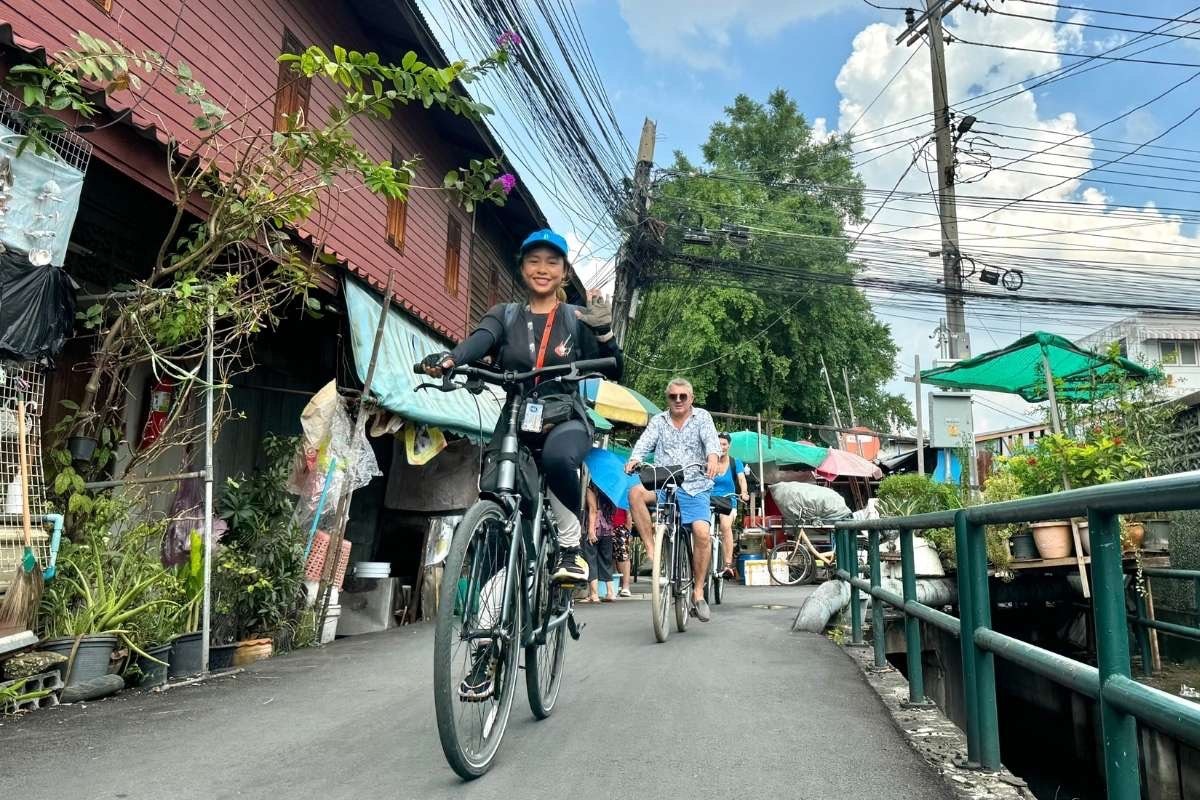
On smaller streets you move slowly enough to notice how neighbourhoods connect: a shrine behind a market, a ferry at the end of a lane, a canal path that would never appear in a taxi journey. Most leisure tours are about access and observation, not covering distance.
Traffic is part of the calculation
Major roads can be fast, busy and uncomfortable for a visitor riding independently. Organised tours usually reduce exposure by favouring sois, alleys, parks and local lanes. They may still cross busy roads or share sections with scooters and cars. A guide manages the route; they do not make traffic disappear.
Heat and humidity matter more than hills
Bangkok is mostly flat, but warm, humid conditions can turn an easy pace into real exertion. Morning departures are often the gentlest. Drink before you feel thirsty, use sun protection and tell the guide early if you need a pause.
Surfaces, paths and pace
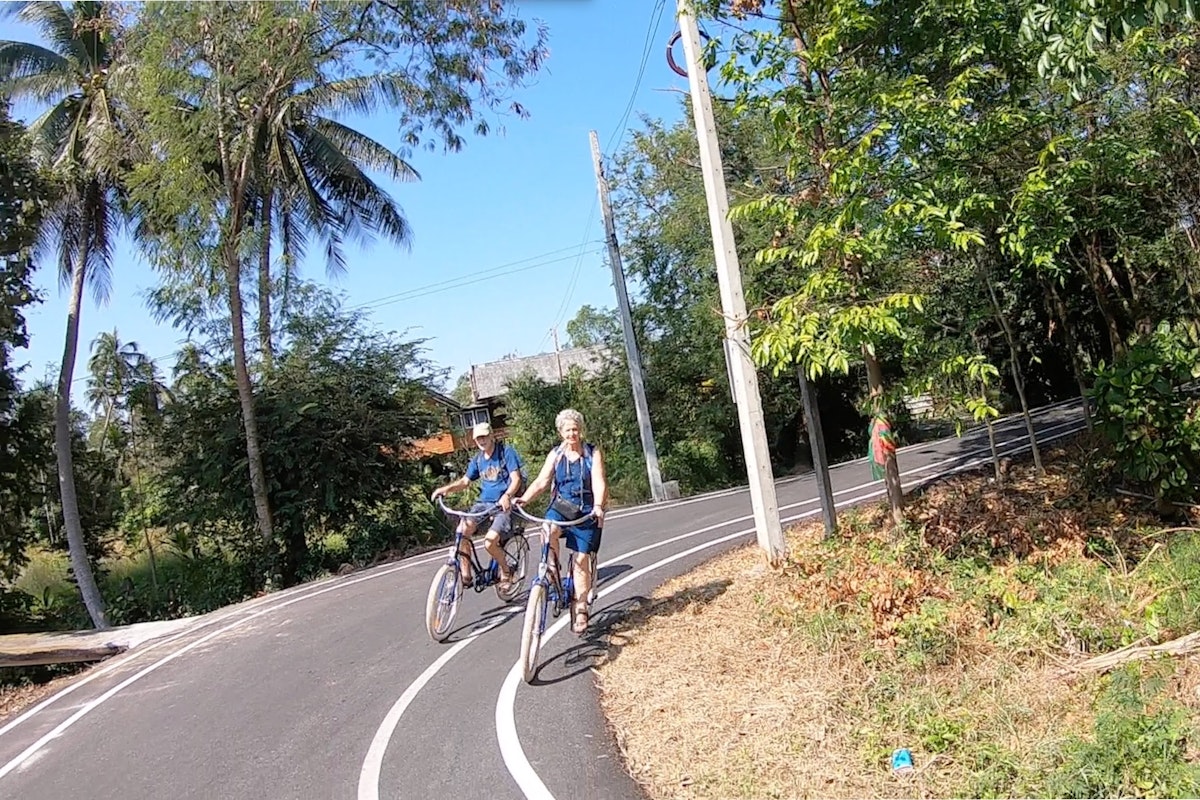
Expect a mix: asphalt, concrete lanes, occasional uneven patches, narrow alleys and, on some green-side routes, raised paths. Confident steering at slow speed is more useful than fitness. Groups generally stop often for context, snacks and crossings.
Why a guide helps
The best reason to join a tour is route knowledge. Guides know which small lanes connect, how to handle ferry crossings and where the calm sections begin. They can also set expectations before a tight path or busy junction.
Helmets and equipment
Most bookable cycling listings here explicitly include a bicycle and helmet, but details can change. Check sizing, child equipment and helmet provision for your selected date. Wear the helmet even when local riders around you do not.
Practical information is general guidance, not a substitute for an operator’s instructions or professional advice.